
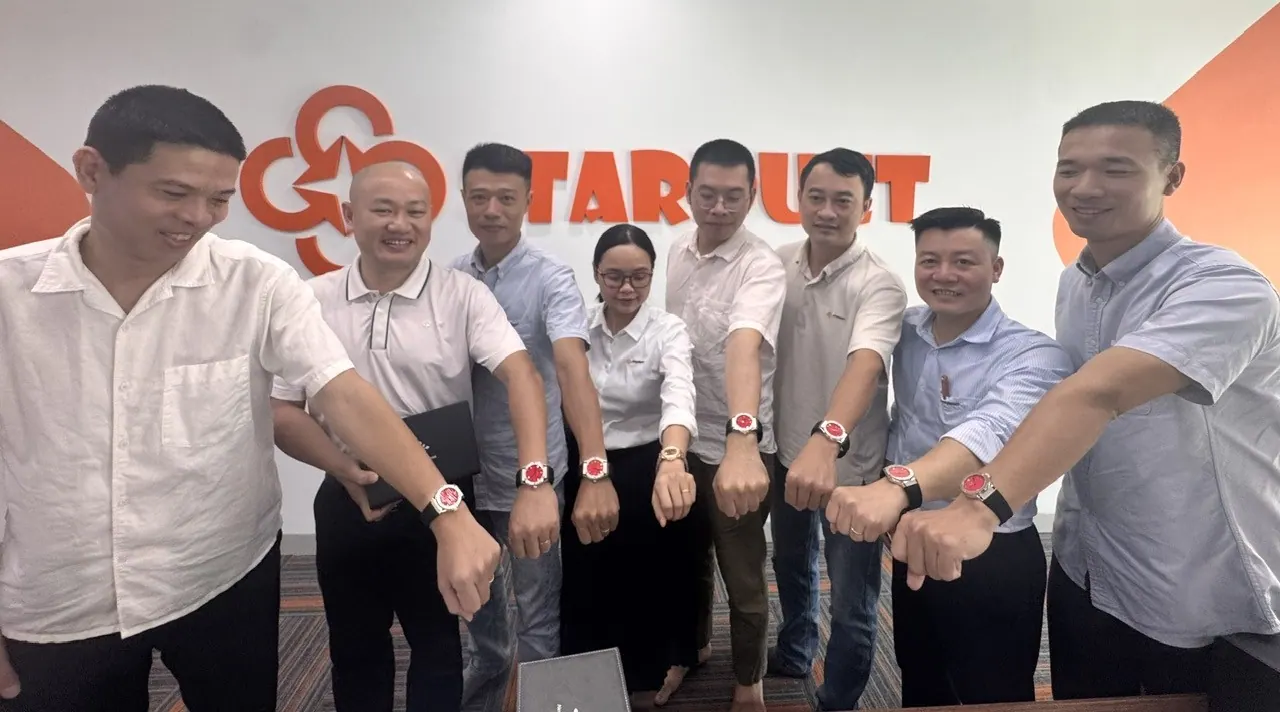
English version machine-translated from the Vietnamese original — under review.
STARDUCT OEM MANUFACTURING PARTNERSHIP
When local manufacturers expand their capabilities through the power of cooperation
Over the years, the HVAC – MEP industry in Vietnam has seen strong growth among local manufacturers. In many provinces and cities, companies have emerged that are capable of manufacturing the basic products of the ducting system, including:
- Galvanised ductwork
- EI fire-rated ductwork
- Various types of dampers
- EI fire dampers
- Basic types of air outlets
These companies have usually invested in workshops, machinery and personnel, and have built strong relationships with local MEP contractors, installation companies and projects. However, this is largely the result of the efforts of the person at the top; they often have not yet built, or find it difficult to build, a professional organisation that covers every function.
It is precisely their understanding of the market, their ability to respond quickly and the personal reputation accumulated over time that have given them a clear competitive advantage on their home turf.
However, as the market develops, projects grow ever larger and technical standards ever higher, many business owners are beginning to face a strategic question:
How can we expand our product portfolio and upgrade quality without having to reinvest in the entire production system from scratch? Who will govern and run the company, who will manage and run production, and who will manage sales?
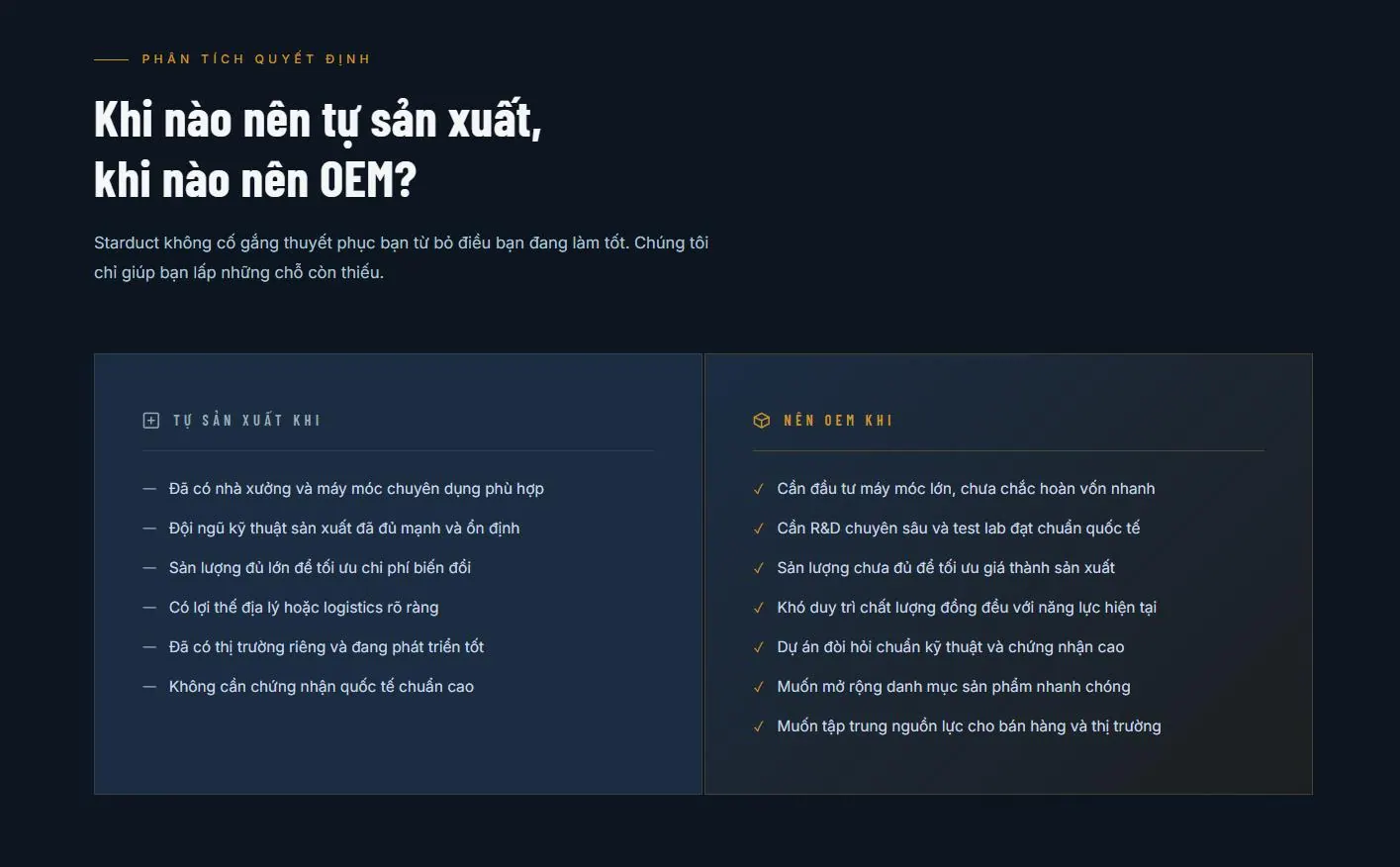
When expanding production is no longer simple
In the early stage of an HVAC ancillary products manufacturer, investing in basic production lines to manufacture:
- ductwork
- dampers
- air outlets
is entirely reasonable.
These products involve technology that is not overly complex, are easy to organise for small and medium-scale production, and suit the skills of off-season farm labour in local markets. Short delivery distances, cheap local labour, products that are all much the same and middling in quality, competing on price…
However, when you want to expand into higher-end product lines, the problem starts to look different.
Many products in the HVAC ancillary industry today require:
- dedicated production lines
- a specialised R&D team
- a rigorous quality control system
- testing equipment and laboratories
- international technical certifications
For example:
- AMCA Air Leakage Class 1 airtight dampers
- EI120 – EI180 fire dampers
- Louvers meeting AMCA 500-L
- Silencers meeting ASTM
- AHRI-certified VAV Boxes
To develop and maintain these product lines, a company has to invest hundreds of billions of VND and spend decades on:
- machinery
- test facilities
- certifications
- technical personnel
- a quality management system
That is an investment that is very large, spans many years and requires covering a large market
The very real pressures of small-scale production
Many companies once believed that manufacturing in-house would reduce costs.
But in practice, production often poses problems that are not simple.
For example:
You only need 1 tonne of 1.5mm Z275 galvanised steel, but the supplier only sells a 6-tonne coil.
The result is:
- 1 tonne is used immediately
- the remaining 5 tonnes sit in the warehouse
- capital is tied up in materials
Or:
You need 200 kg of aluminium blades to produce a batch of grilles, but the supplier sells a minimum of 500 kg.
Meanwhile, another type of blade sits in stock by the tonne with no orders.
Another situation:
You send a batch of grilles out for outsourced powder coating.
But:
- you have to queue for a whole week to get your turn
- in humid or rainy weather, coating is not possible
- the customer keeps chasing the schedule
Or:
You deliver a batch of 500 air outlets, but if just 2–3 have coating defects, handling the replacements can take a whole week.
Not because the defect is serious, but because a small, fragmented supply chain is not flexible enough.
These problems are not the company's fault.
They are simply the natural limitations of small-scale, fragmented production
When scale determines cost
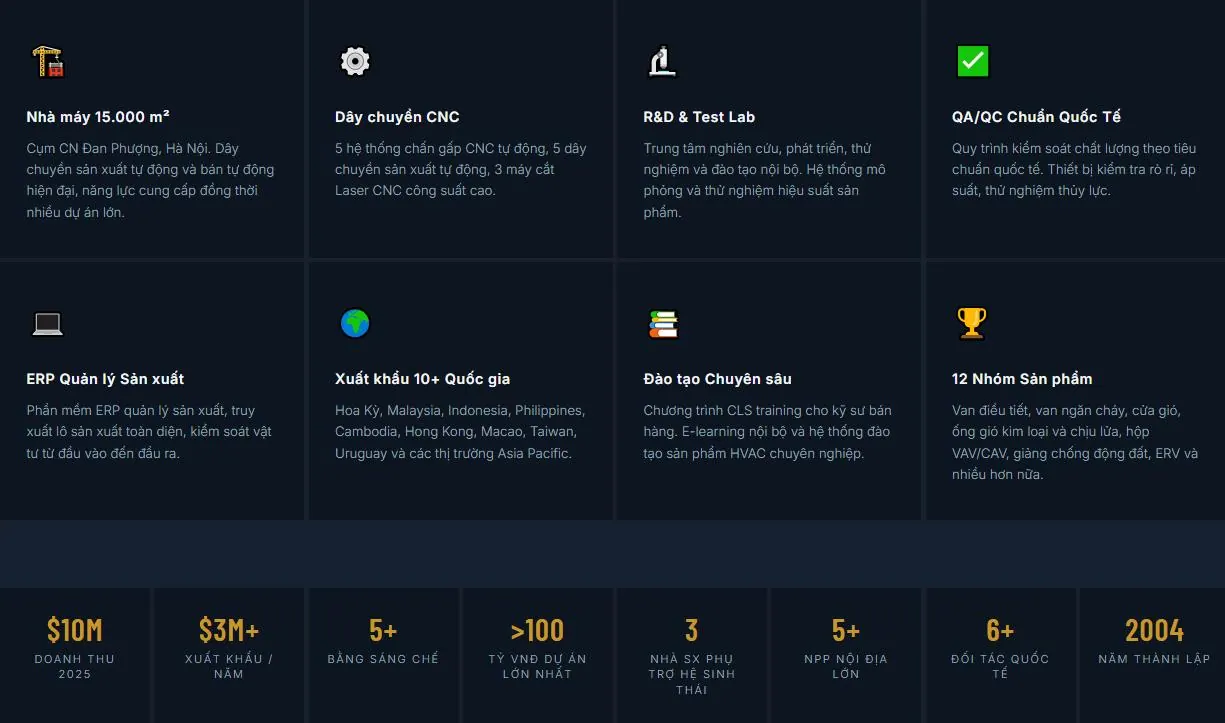
By contrast, professional manufacturers with large scale and complete systems usually have very different advantages.
They have invested in:
- hundreds of billions of VND in factories
- dedicated production lines
- a quality management system
- test laboratories
- a highly qualified engineering team
- a broad, professional sales network.
Once a factory has passed its break-even point, almost every new order can be sold at cost price and still be profitable.
This means:
Their selling price is sometimes lower than even the cost price of small manufacturers.
Not because they are dumping prices. But because their production scale allows them to optimise costs far better.
So what should local companies do?
The answer is not to give up manufacturing.
Quite the opposite.
Local manufacturers still have very significant advantages:
- a deep understanding of the market
- close relationships with contractors
- fast response to projects
- a strong reputation in the region
These advantages cannot easily be replaced by companies from far away.
The question is not whether or not to manufacture in-house.
The question is: What should a company manufacture itself, and for which parts should it cooperate
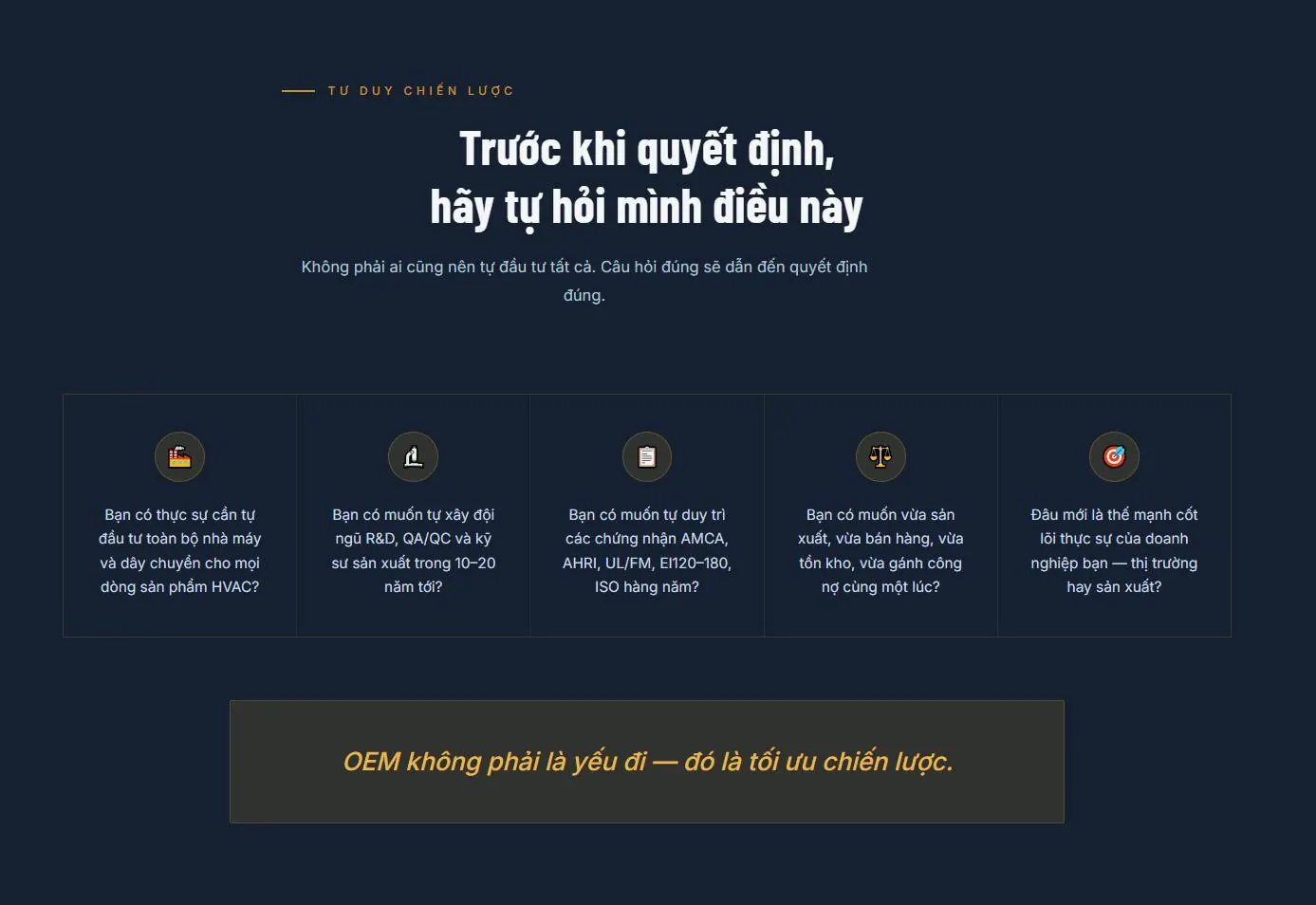
The OEM Partnership strategy
It is from this very thinking that the STARDUCT OEM MANUFACTURING PARTNERSHIP was born.
The principle of the programme is very simple:
Each party focuses on what it does best.
Local manufacturers:
- continue to manufacture the products in which they are already strong
- continue to develop their markets and customers
Meanwhile, Starduct takes care of:
- manufacturing high-tech products
- R&D development
- maintaining international certifications
- optimising large-scale production
Through the OEM model, partners can quickly add products such as:
- VCD / NRD / PRD dampers to the AMCA 500D standard
- Fire Damper EI30 – EI180 - QCVN 06:2023/BXD, single-blade and multi-blade - Belimo or China motors. Tube-type fusible link.
- Linear Bar / Jet Nozzle Diffuser certified to Ashrae 70:2006
- Louver to the AMCA 500-L standard
- Silencer to the ASTM 477 standard
- Cable Tray to the IEC 61537 standard
- VAV Box certified to AHRI 880
The values partners can inherit
When joining the OEM programme, partners do not start from zero.
They inherit a foundation that Starduct has built over many years:
An internationally compliant product portfolio
Including:
- certifications
- test reports
- complete technical documentation
A professional production system
- consistent quality
- tight process control
- large production capacity
Competitive pricing
Thanks to:
- large-scale production
- an optimised supply chain
Brand reputation
Starduct has taken part in thousands of HVAC projects in Vietnam.
Training and technical support
Partners are supported by:
- the Starduct engineering team
- in-depth training programmes for sales engineers
Holding your home turf
In many large projects, local companies lose opportunities not because they are weak in the market.
But because of:
- an incomplete product portfolio
- a lack of technical certifications
- a lack of suitable specifications
At that point, suppliers from far away can step in and win the project.
Not because they understand the market better.
But because they have products that meet the project's standards.
The OEM Partnership helps fill that gap.
Local companies still keep their proactive role in their own market, while also gaining high-standard products to take part in larger projects.
The power of cooperation
The world of modern manufacturing is becoming ever more specialised.
Not every company needs to build every capability itself from scratch.
The most successful companies are usually those that know how to combine the right strengths of their partners.
The STARDUCT OEM MANUFACTURING PARTNERSHIP strategy aims to build a cooperative ecosystem between:
- Starduct's manufacturing and technological capabilities
- the market capabilities of local manufacturers
Because in business, as in life:
“One tree alone cannot make a hill; three trees together make a high mountain.”
Contact us to discuss this topic together:
Email: kinhdoanh@nsca.vn, ndao@nsca.vn
Mobile phone: 090 211 5796 - Mr Đào Nguyên Ngọc - Head of Sales, NSCA.