
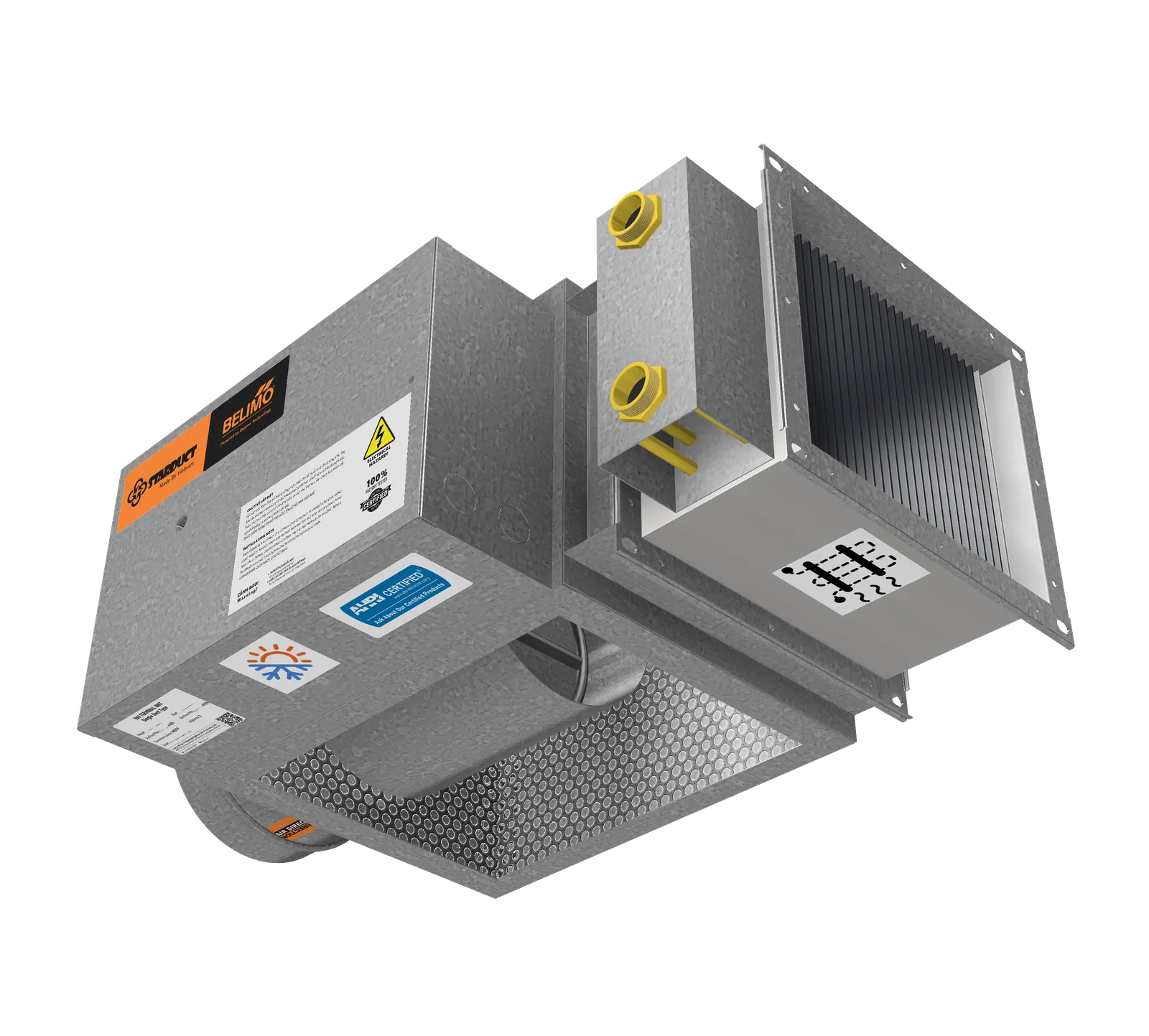
Introduction to VAV Box and VAV System
Author: Starduct Academy Team Published: 2025
This document provides only the basic concepts and scope—serving as definitions—for topics related to VAV Box products and VAV systems. It is intended as an introduction and a guide for further study by sales engineers and MEP engineers who are beginning to explore VAV technology.
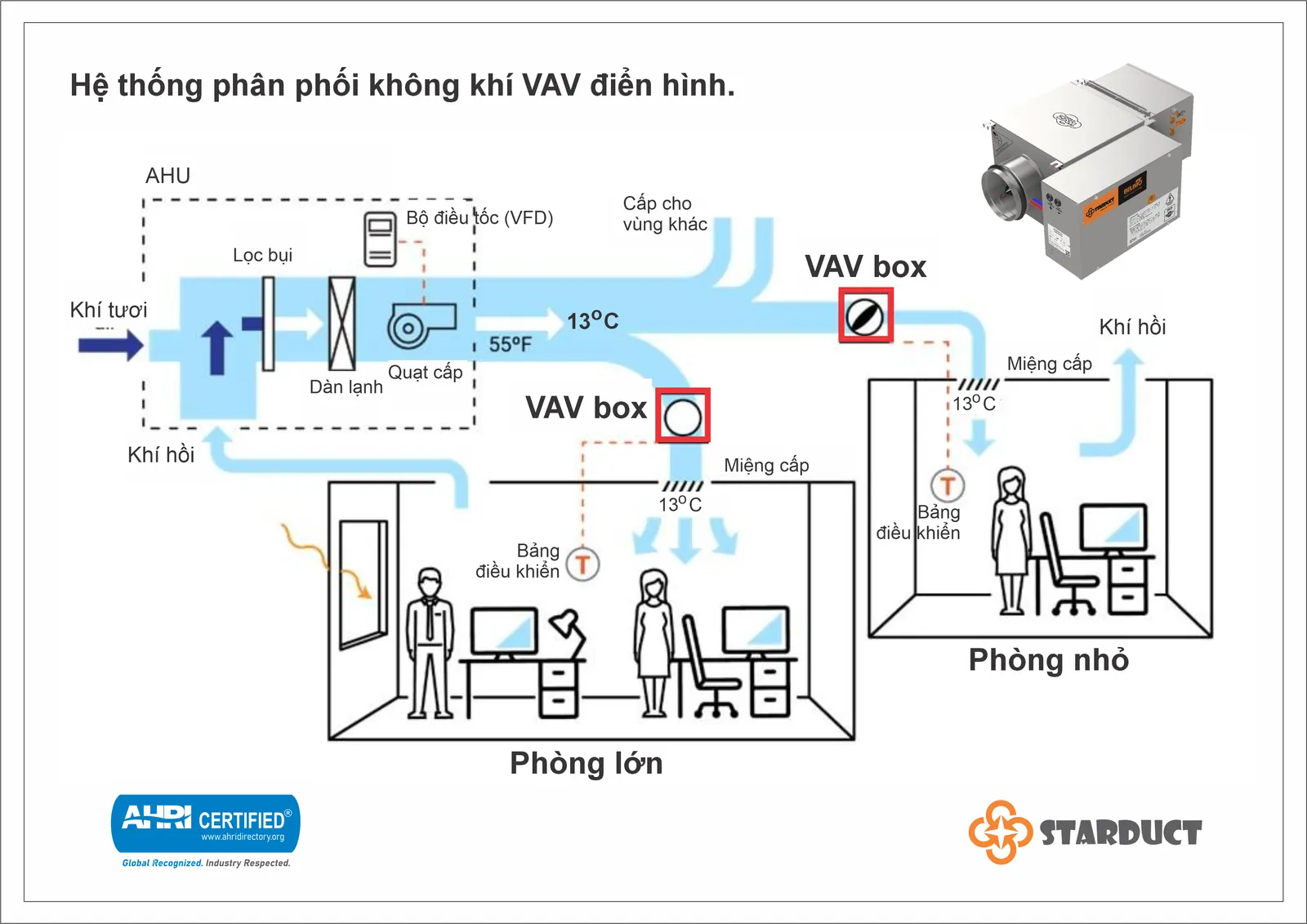
Table of Contents
- Introduction to VAV Box
- Comparison: VAV System vs. VRV System
- Steps to Begin Designing a VAV System
- Classification and Applications of VAV Boxes
- Technical Specifications and Design Standards
- Ductwork Design for VAV Systems
- Airflow, Pressure Calculations, and VAV Selection
- Integration with Other Systems
- Installation, Testing, and Commissioning
- DDC Device Selection and System Control
- Maintenance of VAV Systems
- AI, IoT, and Smart Building Applications
- Comparison with Other HVAC Solutions
- Case Study – Real-World VAV System Design
- Summary of Investment Efficiency
1. Introduction to VAV Box
A VAV (Variable Air Volume) Box is a key component in central HVAC systems. It adjusts the supply airflow to each space based on actual demand. Common types include:
- Single Duct
- Dual Duct
- Fan Powered
- Reheat
- VAV Diffuser
VAV systems optimize energy use, ensure thermal comfort, and maintain indoor air quality.
2. VAV vs. VRV Systems
- VAV System: Uses a central AHU and VAV Boxes to regulate airflow. Ideal for large-scale projects with lower investment and energy costs.
- VRV System: Suitable for small to medium buildings. Higher investment but easier to operate.
| Criteria | VAV System | VRV System |
|---|---|---|
| Initial Cost | Lower | Higher |
| Electricity Cost | Lower (efficient AHU) | Higher |
| Maintenance | Lower (simpler structure) | Higher |
AHU Heat Sources:
- Chiller (Water/Air Cooled)
- Heat Pump
- Boiler
- DX Coil
Choose the appropriate heat source based on project type.
3. Steps to Design a VAV System
- Survey thermal loads and zone layout
- Define main AHU and number of VAV Boxes
- Create schematic diagrams and select VAV types
- Calculate airflow and pressure loss
- Choose controllers and sensors
Advanced topics include sensor selection, BMS integration, and energy simulation.
4. VAV Box Types and Applications
- Single Duct VAV: Common in offices and meeting rooms
- Fan Powered VAV: Includes fan for stable airflow
- Reheat VAV: Includes electric/hot water coil for precise temperature control
- VAV Diffuser: Ceiling-mounted, adjusts airflow at outlet
Safety for Reheat VAV:
- Overheat protection: temperature limit sensor
- No-airflow protection: airflow sensor to shut off heater
5. Technical Specs and Standards
- Complies with AHRI 880, ASHRAE 62.1, 90.1
- Sound-insulated materials, galvanized or aluminum casing
- Strict control of noise and pressure loss
6. Ductwork Design for VAV
- Calculate airflow per zone
- Select duct size to minimize pressure loss
- Optimize layout for balanced air distribution
7. Airflow, Pressure, and VAV Selection
- Airflow (CFM) = thermal load / ΔT
- Calculate pressure to select suitable AHU
- Use software like HAP or Trace 700 for accurate design
8. Integration with Other Systems
- BMS, CO₂, temperature, humidity sensors
- AHU, chillers, heat exchangers
- Coordinated operation ensures energy savings and IAQ
9. Installation, Testing, and Commissioning
- Install per drawings, verify sensor connections
- Calibrate Vmin/Vmax for each box
- Test operation with AHU
10. DDC Device Selection and Control
- Brands: Belimo, Siemens, Johnson
- Multi-level control: zone → floor → central
- Redundancy: dual power supply, dual network
11. Maintenance
- Clean sensors, check actuators
- Verify BMS connections
- Plan regular inspections
12. AI, IoT, and Smart Building Integration
- AI learns user behavior
- IoT enables remote cloud connectivity
- Integrates with smart management platforms
13. Comparison with Other HVAC Solutions
| Criteria | VAV | VRV | FCU |
|---|---|---|---|
| Investment | Medium | High | Low |
| Electricity | Low | Medium | High |
| Maintenance | Low | High | Medium |
| IAQ Efficiency | High | Medium | Low |
| Lifespan | 15–20 yrs | 10–15 yrs | 7–10 yrs |
14. Case Study – Real-World VAV System
- Project: 5-story office, 1,000 m²/floor
- Design: 1 AHU (80,000 CMH) + 40 VAV Boxes
- Results:
- 30% lower investment than VRV
- 20% lower operating cost
15. Investment Efficiency Summary
| Criteria | VAV | VRV |
|---|---|---|
| Investment | 4.2 billion VND | 6.5 billion VND |
| Electricity | 300 million/year | 360 million/year |
| Maintenance | 100 million/year | 200 million/year |
| Payback Period | 4.1 years | 8.5 years |
Conclusion:
VAV systems offer long-term cost advantages, durability, and superior air quality control for large buildings.