
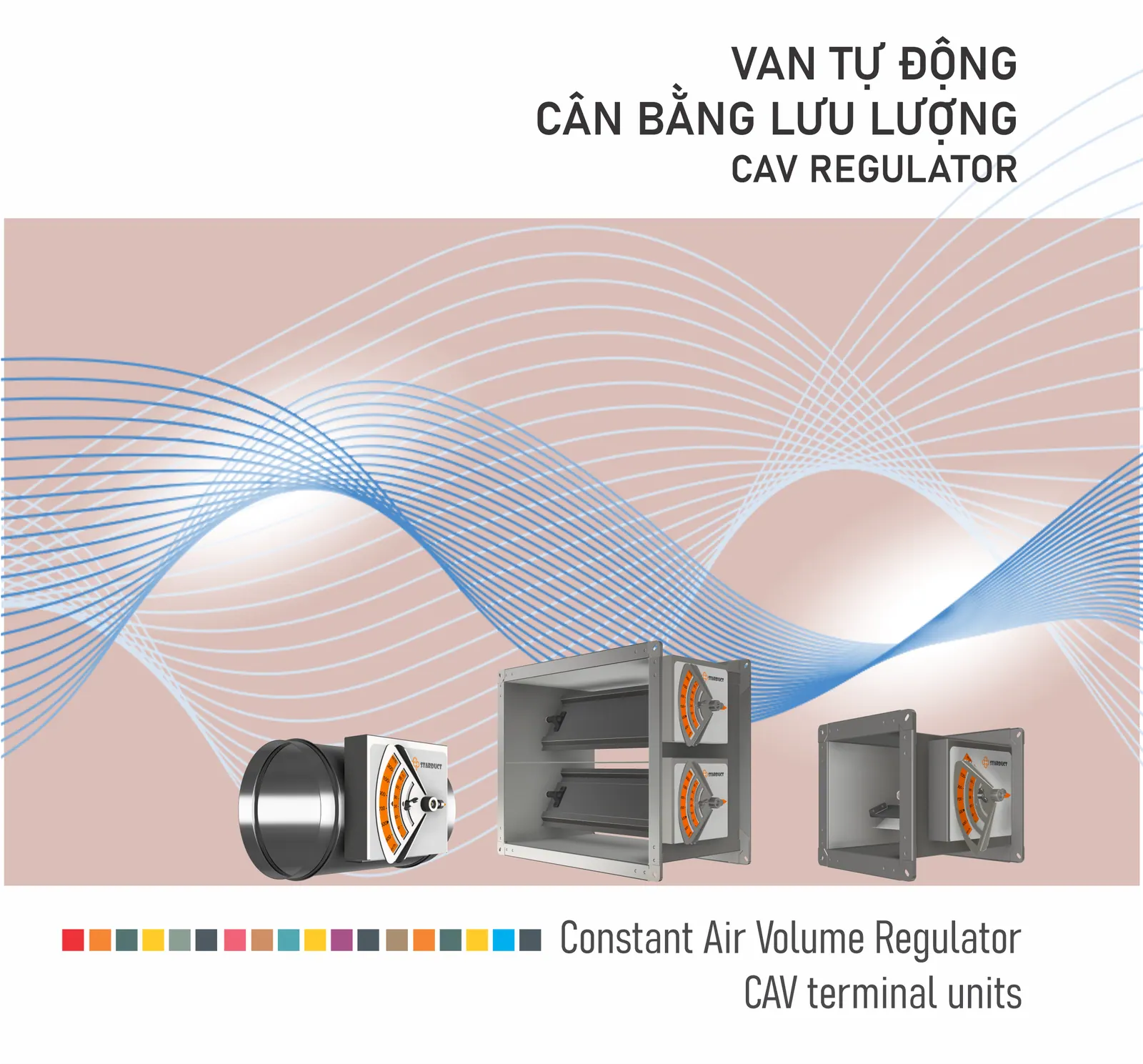
🔍 Comparison Between VAV and CAV Systems
| Criteria | VAV (Variable Air Volume) | CAV (Constant Air Volume) |
|---|---|---|
| Operating Principle | Adjusts airflow volume based on demand; air temperature remains constant | Maintains constant airflow; adjusts air temperature to meet thermal needs |
| Temperature Control | Achieved by modulating airflow through VAV dampers | Achieved by changing the temperature of the supply air |
| Energy Efficiency | More energy-efficient due to demand-based airflow control | Higher energy consumption as airflow remains constant regardless of demand |
| Best Suited For | Spaces with variable thermal loads (e.g., offices, meeting rooms) | Spaces with stable conditions (e.g., server rooms, warehouses) |
| Initial Investment | Higher, due to more complex controls and sensors | Lower, thanks to simpler system design |
| Zoning Capability | Allows independent zone control for better comfort and efficiency | Limited zoning flexibility |
| Noise Levels | Typically quieter at reduced airflow | Constant airflow may result in higher noise if not optimized |
| Maintenance | More complex, with moving parts requiring regular checks | Simpler system with fewer components to maintain |
✅ Key Advantages
VAV System:
- Energy-saving through demand-based airflow
- Flexible and responsive to room temperature changes
- Independent zone control
- Reduced noise during low-load operation
CAV System:
- Simple design and installation
- Reliable in environments with steady thermal loads
- Lower upfront cost
- Minimal maintenance requirements